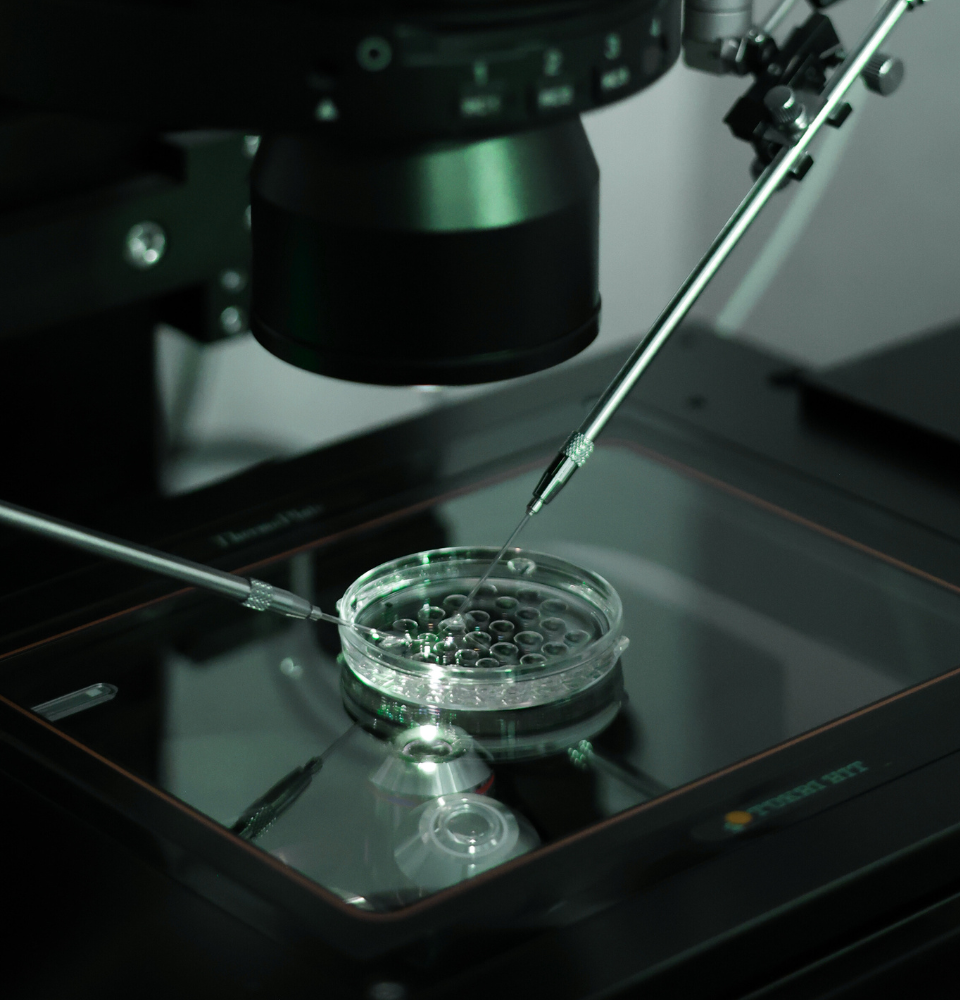
What is Blastocyst Culture?
Blastocyst culture is an advanced IVF laboratory technique where embryos are cultured for 5 to 6 days — instead of the standard 3 — until they reach the blastocyst stage, a more developed and implantation-ready form. This allows for better embryo selection and increases the likelihood of a successful pregnancy.
At EPIA, we specialize in extended culture using state-of-the-art incubators that mimic the natural uterine environment, giving embryos the best chance to thrive.
Who is Blastocyst Culture for?
Blastocyst culture is especially beneficial for:
- Couples undergoing IVF with multiple high-quality embryos
- Patients with previous failed Day 3 transfers
- Those opting for preimplantation genetic testing (PGT-A)
- Women over 35 who need precision in embryo selection
- Couples pursuing single embryo transfer (SET) to reduce twin risks

The EPIA Difference
Why Choose EPIA for Blastocyst Culture?
- Time-Lapse Imaging Incubators: Real-time monitoring of embryo growth without disturbing them
- High-Precision Selection: Transfer only the strongest embryos for better success rates
- PGT-Compatible: Ideal stage for genetic testing (Day 5 or Day 6 biopsies)
- AI-Scored Embryos: Technology-enhanced scoring to support embryologist decisions
- Reduced Miscarriage Risk: Higher quality transfers lead to better implantation and lower risk
Transformation
What is the Blastocyst Culture Process?
- Step 1: IVF + Fertilization Eggs and sperm are combined via conventional IVF or ICSI
- Step 2: Embryo Monitoring (Days 1–3) Early-stage embryos are cultured and assessed
- Step 3: Extended Culture to Day 5–6 Embryos are monitored until they reach the blastocyst stage
- Step 4: Embryo Grading + Selection Only the best embryos are selected for transfer or freezing
- Step 5: Transfer or PGT-A (if needed) High-quality embryos are transferred or sent for genetic screening
Blastocyst Culture
FAQs
Can't find what you're looking for?
Is blastocyst culture better than Day 3 transfer?
Yes, in most cases. It allows us to better identify viable embryos, improving pregnancy chances.
Does every embryo reach the blastocyst stage?
Not all. That’s why it’s typically recommended when you have multiple embryos on Day 3.
Is it more expensive?
Slightly, due to the extended culture and tech involved — but it often results in fewer cycles needed.
Can I still freeze unused embryos?
Absolutely. Blastocysts can be safely frozen using vitrification.
Is it safe for the embryo?
Yes. Our lab conditions are optimized for extended embryo growth, closely mimicking the uterine environment.