A guide to IVF in India: process, choices, and what couples should know when starting their fertility treatment.Starting or growing a family is a journey filled with hope, dreams, and sometimes unexpected challenges. If you’re exploring in vitro fertilization (IVF), you may be feeling a mix of excitement, curiosity, and perhaps a little apprehension. Please …


A guide to IVF in India: process, choices, and what couples should know when starting their fertility treatment.
Starting or growing a family is a journey filled with hope, dreams, and sometimes unexpected challenges. If you’re exploring in vitro fertilization (IVF), you may be feeling a mix of excitement, curiosity, and perhaps a little apprehension. Please know that whatever you’re experiencing—whether it’s uncertainty, frustration, or cautious optimism—your feelings are valid and completely understandable.
IVF has become a modern beacon of hope for countless individuals and couples around the world. It’s a journey that’s both deeply personal and supported by remarkable advances in science and medicine. In this guide, we’ll walk with you through every step of the IVF process, sharing information, encouragement, and understanding. Our goal is to help you feel informed, supported, and empowered as you consider your options and take the next steps on your path to parenthood.
No matter where you are on your fertility journey, you are not alone. We’re here to offer comfort, clarity, and hope—because every story matters, and every family deserves a chance to thrive.
What Is IVF and How Does It Work?
If you’re new to IVF, you might be wondering what it really means and how it can help. It’s okay to feel a bit unsure—many people do at first. We’re here to walk you through it with care and understanding.
IVF Full Form: Meaning and Basics
IVF stands for In Vitro Fertilization. “In vitro” is Latin for “in glass,” which refers to the way fertilization happens outside the body, in a carefully controlled environment. While the process has come a long way since its early days, the name reminds us of the gentle science behind every step.
Learning what IVF means is a helpful first step in feeling more comfortable with the journey ahead. You’re not alone—everyone starts somewhere, and it’s perfectly normal to have questions.
How IVF Helps Build Families
IVF is a special kind of fertility treatment that offers hope to many people who want to start or grow their family. During IVF, eggs are collected from the ovaries and combined with sperm in a laboratory. After a few days, one or more healthy embryos are placed into the uterus, where they have the chance to grow into a pregnancy.
This process has made so many families possible, bringing comfort and joy to people all over the world. Whether you’re facing challenges with natural conception or other obstacles on your path to parenthood, IVF is here to support you. It’s a gentle reminder that you’re not alone, and that there are caring, thoughtful ways to help make your dreams of family come true.
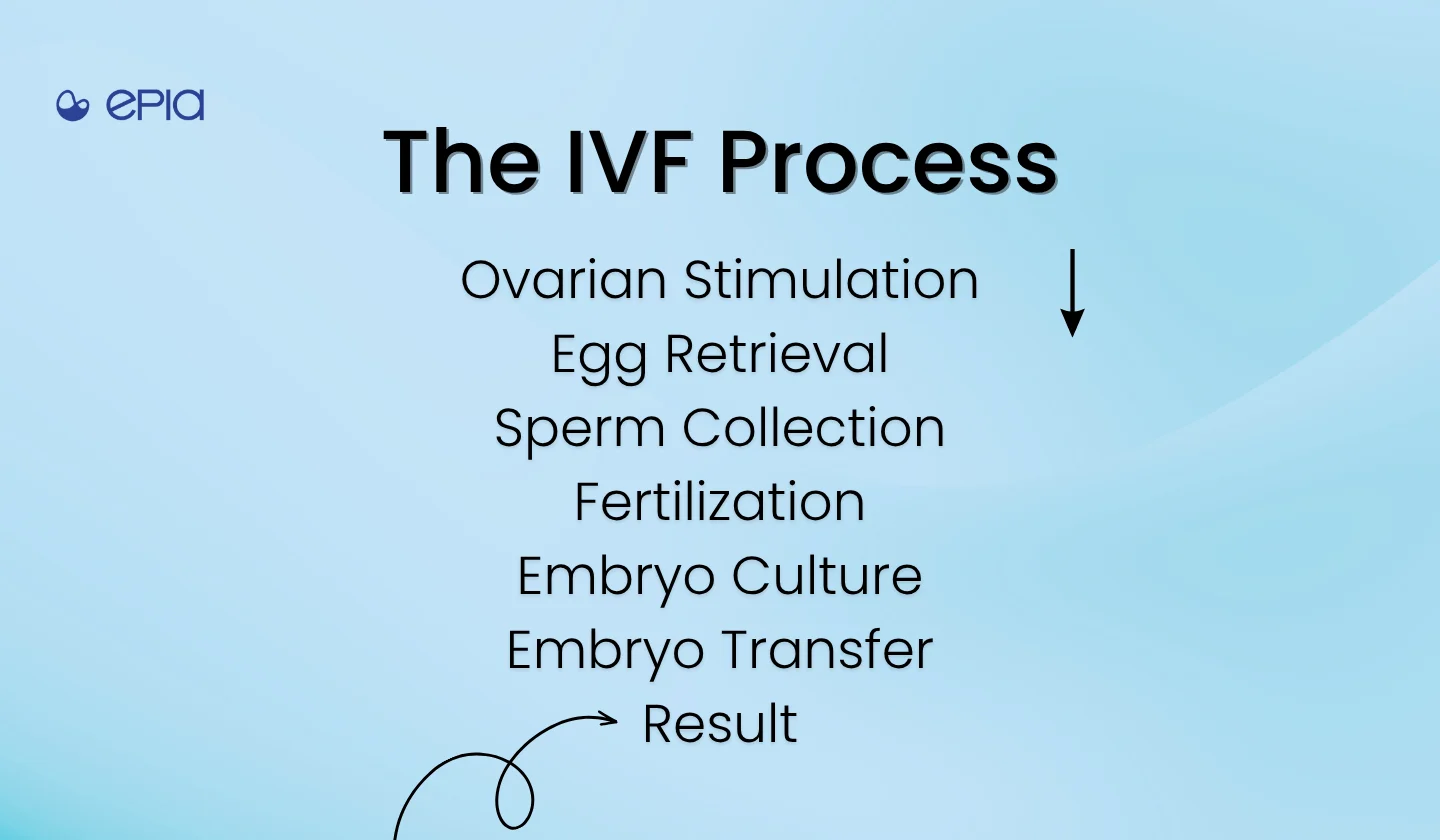
The IVF Process: Step-by-Step Journey
If you’re curious about what the IVF process looks like, you’re not alone. Many people find comfort in knowing what to expect, and we’re here to guide you through each step with care and understanding.
Ovarian Stimulation: The First Step Toward New Life
The IVF journey often begins with ovarian stimulation. This involves gentle medications to help your ovaries produce multiple eggs, increasing the chances of success. It’s a hopeful first step, and your care team will be by your side, monitoring your progress and supporting you throughout.
Egg Retrieval: Precision in Practice
Once your eggs are ready, a simple procedure called egg retrieval takes place. It’s performed under gentle sedation, so you’ll be comfortable and safe. This step is a thoughtful, careful process—one that brings you closer to the possibility of new life.
Sperm Collection: Partnering for Parenthood
Around the same time as egg retrieval, sperm is collected from your partner or a donor. This is a straightforward process, and your team will handle everything with respect and sensitivity. Together, these steps set the stage for what comes next.
Fertilization: Where Science Meets Nature
In the laboratory, the collected eggs and sperm are combined in a process called fertilization. This is where science and nature work hand in hand, creating the earliest beginnings of life. It’s a moment filled with hope and possibility.
Embryo Culture: Nurturing Future Possibilities
After fertilization, the embryos are carefully nurtured in the lab for a few days. Your care team monitors their development, ensuring only the healthiest embryos are considered for the next step. This is a time of gentle anticipation and care.
Embryo Transfer: Planting the Seeds of Success
When the time is right, one or more healthy embryos are gently transferred into your uterus. This is a simple, painless procedure, and it’s filled with hope for what’s to come. Your team will be there to support you every step of the way.
The Wait and the Test: Anticipation and Joy
After the transfer, there’s a short wait before you can take a pregnancy test. This period can feel emotional, and it’s okay to have mixed feelings. We’re here to offer support, encouragement, and hope as you look forward to the results. Whatever happens, you’re not alone—your journey matters, and so do you.
Why Choose IVF? Reasons and Benefits
IVF stands as a versatile and invaluable tool for many people who wish to start or expand their families. It opens doors for those facing a variety of reproductive challenges, offering hope and practical solutions where other options may fall short.
Top Reasons People Choose IVF
People choose IVF for a wide range of reasons, often when natural conception is difficult or not possible. Some of the most common situations include blocked or damaged fallopian tubes, which prevent the egg and sperm from meeting naturally. IVF bypasses this barrier by bringing eggs and sperm together in the laboratory.
Male factor infertility, such as low sperm count or poor sperm motility, is another frequent reason for choosing IVF. Advanced techniques can help ensure fertilization even when sperm quality is an issue. Ovulation disorders, including conditions like polycystic ovary syndrome (PCOS) or irregular cycles, can also make it difficult to conceive, and IVF provides a way to overcome these obstacles.
Endometriosis, a condition where tissue similar to the lining of the uterus grows outside the uterus, can affect fertility. IVF is often recommended for those whose ability to conceive is impacted by this condition. In some cases, infertility remains unexplained even after thorough testing, and IVF can help by increasing the chances of successful conception.
Age-related fertility decline is another common reason for pursuing IVF, particularly for women over 35. As egg quality and quantity decrease with age, IVF allows for the selection of the best quality embryos for transfer. For those with a family history of genetic disorders, IVF paired with genetic testing offers the opportunity to screen embryos before transfer, reducing the risk of passing on inherited conditions.
IVF also provides options for single parents and same-sex couples who wish to build their families using donor sperm or eggs. This makes IVF an inclusive choice for many different types of families.
Who Can Benefit from IVF?
IVF is not just for heterosexual couples experiencing infertility. It offers solutions to a wide range of people, including individuals and couples with medical infertility, older individuals, those with genetic risks, and same-sex couples or single people seeking to have biological children.
People facing medical treatments that may affect fertility, such as chemotherapy or radiation, can use IVF to preserve their fertility by freezing eggs, sperm, or embryos for future use. Additionally, couples who have tried other fertility treatments without success often turn to IVF as the next step.
By addressing so many different reproductive challenges, IVF empowers individuals and couples to pursue the path to parenthood that best fits their needs and circumstances. It is a powerful resource for anyone who dreams of building a family.
The History of IVF: Key Milestones
The story of IVF is one of scientific curiosity, perseverance, and hope. It’s a journey marked by dedicated researchers and landmark moments that have transformed the lives of countless families around the world.
Who Invented IVF? Meet the Pioneers
IVF was developed through the collaborative efforts of several pioneering scientists and medical professionals. The most widely recognized figures are Dr. Patrick Steptoe, a gynecologist, and Dr. Robert Edwards, a physiologist, who worked together in England to bring IVF from theory to reality. Their partnership was also supported by Jean Purdy, a nurse and embryologist whose contributions helped shape the early success of the procedure. Together, this team overcame scientific, technical, and ethical challenges to achieve a breakthrough that changed the world of reproductive medicine.
Their work culminated in the birth of Louise Brown, the world’s first “test tube baby,” in 1978. This achievement not only proved the viability of IVF but also opened the door to new possibilities for families facing infertility. The dedication and vision of these pioneers continue to inspire hope for millions.
Milestones in IVF: From Laboratory to Living Room
The history of IVF is rich with milestones that have made it the accessible and effective treatment it is today. Early experiments in animal reproduction laid the groundwork, but it was the successful fertilization of human eggs in the laboratory that marked a turning point. The birth of Louise Brown in 1978 demonstrated that IVF could result in healthy babies, and it quickly became a beacon of hope for those struggling to conceive.
Soon after, IVF technology spread globally, with the second IVF baby born in India just months later, thanks to the efforts of Dr. Subhash Mukherjee. The 1980s and 1990s saw rapid advancements, including the introduction of embryo freezing, improved fertility drugs, and the development of techniques like intracytoplasmic sperm injection (ICSI) for male infertility. Preimplantation genetic testing (PGT) also emerged, allowing for the screening of embryos for genetic conditions.
Today, IVF is a well-established and continually evolving field. It has helped millions of people worldwide achieve their dream of parenthood, and its story is a testament to the power of science, compassion, and perseverance. From the laboratory to the living room, IVF continues to bring new life and new hope to families everywhere.
IVF Success Rates: What to Expect
When considering IVF, one of the most common questions is about the chances of success. Understanding what success means in IVF, what factors influence it, and how it compares in different settings can help you set realistic expectations and feel more confident about your journey.
Understanding IVF Success Rates
IVF success rates refer to the likelihood of achieving a pregnancy and ultimately a live birth after undergoing treatment. These rates are often expressed as a percentage and can be measured in different ways, such as the clinical pregnancy rate (confirmed by ultrasound) or the live birth rate (the ultimate goal for most couples). While specific numbers can vary, it’s important to remember that every individual and every cycle is unique. Success rates are influenced by many factors, so they serve as a general guide rather than a guarantee.
What Influences IVF Success?
Several key factors play a role in determining the likelihood of a successful IVF cycle. Age is one of the most significant, as younger women generally have higher success rates due to better egg quality and quantity. The cause of infertility, whether it’s related to the fallopian tubes, sperm quality, or other medical conditions, also affects outcomes.
Embryo quality is another critical factor, with higher-quality embryos increasing the chances of successful implantation. Lifestyle factors, such as maintaining a healthy weight, avoiding smoking and excessive alcohol, and managing stress, can also make a difference. The expertise of the fertility team and the technology available at the clinic can further influence results, highlighting the importance of choosing a trusted provider.
IVF Success in India: A Growing Legacy
In India, IVF success rates have improved consistently over the years, thanks to advances in technology and growing expertise among fertility specialists. Currently, the average success rate for IVF using a woman’s own eggs is around 35–40%, with rates being higher for younger women and lower for those over 40. When donor eggs are used, success rates can be even higher, often reaching 50–70% per attempt.
The increasing demand for IVF in India reflects both the rising awareness of fertility treatments and the hope they offer to many couples. With ongoing advancements and a focus on personalized care, IVF continues to build a strong legacy of helping families grow and thrive.
IVF After Menopause: Is It Possible?
Menopause traditionally marks the end of a woman’s natural reproductive years, but advances in fertility medicine have opened new possibilities for those who wish to become mothers later in life. IVF is now a viable option for many women after menopause, thanks to innovative approaches and careful medical support.
Can IVF Be Done After Menopause?
Yes, IVF can be performed after menopause, although the approach differs from standard IVF. After menopause, a woman’s ovaries no longer produce viable eggs, but her uterus can still support a pregnancy with appropriate hormonal preparation. This means that while using her own eggs is not possible, IVF with donor eggs offers a pathway to pregnancy. Many women have successfully conceived and given birth after menopause using this method, though the process does involve unique considerations and potential risks.
Donor Eggs and Hormone Therapy: New Frontiers
The use of donor eggs is central to IVF after menopause. Eggs from a younger, healthy donor are fertilized with sperm in the laboratory, and the resulting embryos are transferred into the woman’s uterus. To prepare the uterus for implantation, hormone replacement therapy (HRT) is used to mimic the body’s natural hormonal environment before menopause. This helps create a receptive uterine lining and supports the early stages of pregnancy.
While this approach has made motherhood possible for many women later in life, it’s important to be aware of the increased risks associated with pregnancy at an older age, such as higher chances of gestational diabetes, hypertension, and preterm birth. Ongoing medical monitoring and a personalized care plan are essential to help minimize these risks and support a healthy pregnancy. With the right support and expert care, IVF after menopause continues to challenge age boundaries and offer new hope to those wishing to build their families.
Gender Selection in IVF: Laws and Ethics in India
Gender selection through IVF is a topic that blends advanced science with important ethical and legal considerations. While technology allows for the selection of a baby’s gender before implantation, strict laws and ethical guidelines govern this practice, especially in India.
Is Gender Selection Possible with IVF?
Gender selection is technically possible using IVF techniques such as Preimplantation Genetic Testing (PGT) or Preimplantation Genetic Diagnosis (PGD). These methods allow doctors to determine the sex of embryos before they are transferred to the uterus with a high degree of accuracy. However, in India, using these techniques for non-medical gender selection is not allowed.
The Ethics and Laws of Gender Selection
In India, gender selection for non-medical reasons is strictly prohibited under the Pre-Conception and Pre-Natal Diagnostic Techniques (Prohibition of Sex Selection) Act, 1994. This law was created to prevent female foeticide, address gender imbalance, and promote gender equality. It bans any technique or procedure used to determine or select the sex of the fetus before or after conception, except when medically necessary to avoid serious sex-linked genetic disorders.
All clinics and laboratories must be registered, and only qualified professionals can perform diagnostic procedures. Advertising or promoting sex selection services is also illegal. Violations of this law can result in severe penalties, including imprisonment, heavy fines, and the loss of medical licenses.
Preimplantation Genetic Testing may be used only for detecting genetic disorders, not for choosing the gender of a baby based on personal preference or family balancing.
Disclaimer: EPIA (Delhi, India) Policy
At EPIA, located in Delhi, India, we strictly follow the Pre-Conception and Pre-Natal Diagnostic Techniques (Prohibition of Sex Selection) Act, 1994 and all related regulations. We do not offer gender selection for non-medical reasons. Our commitment is to provide safe, ethical, and compassionate fertility care while upholding the highest standards of legal and ethical responsibility.
IVF and PCOS: Success Stories and Special Care
Polycystic Ovary Syndrome (PCOS) is a common hormonal disorder that can make it more challenging for women to conceive naturally. However, IVF offers a hopeful path for many women with PCOS, helping them overcome these obstacles and move closer to their dream of parenthood.
Will IVF Work with PCOS?
Yes, IVF can be highly effective for women with PCOS. While PCOS can affect ovulation and make natural conception difficult, IVF works by stimulating the ovaries to produce multiple eggs, which are then fertilized in the laboratory. This bypasses many of the challenges associated with irregular ovulation and hormonal imbalances.
Women with PCOS often respond well to ovarian stimulation, producing a good number of eggs. This can increase the chances of successful fertilization and healthy embryo development. With careful monitoring and personalized treatment plans, IVF can help many women with PCOS achieve pregnancy.
Special Considerations for PCOS Patients
Although IVF can be successful for women with PCOS, there are some special considerations to keep in mind. PCOS patients are more likely to experience a higher risk of ovarian hyperstimulation syndrome (OHSS), a condition where the ovaries become swollen and painful in response to fertility medications. To minimize this risk, fertility specialists use gentle stimulation protocols and close monitoring throughout the process.
Weight management and overall health are also important factors. Maintaining a healthy weight and lifestyle can improve the effectiveness of IVF and reduce the risk of complications. Emotional support is equally valuable, as the journey can feel overwhelming at times. Your care team will be there to guide you, offering encouragement and understanding every step of the way.
With the right approach and support, IVF can be a powerful tool for women with PCOS, helping them overcome obstacles and realize their dreams of starting or growing a family.
Sperm Sources in IVF: Options for Every Family
The source of sperm is a key part of the IVF process, and there are several options available to help individuals and couples on their journey to parenthood. Understanding these options can empower you to make informed choices and feel confident about your path forward.
Where Does the Sperm Come From in IVF?
In most IVF cycles, sperm is collected from the male partner through ejaculation. This process is simple and non-invasive, and the sperm is then prepared in the laboratory to select the healthiest and most motile sperm for fertilization.
For men with very low sperm count, poor motility, or other sperm-related issues, advanced techniques are available. These include surgical sperm retrieval methods such as testicular sperm extraction (TESE) or percutaneous epididymal sperm aspiration (PESA), where sperm is collected directly from the testicles or epididymis. The retrieved sperm is then used with IVF, often in combination with intracytoplasmic sperm injection (ICSI), to maximize the chances of successful fertilization.
Using Donor Sperm: Broadening the Horizon
When using the male partner’s sperm is not possible or not desired, donor sperm offers another pathway to parenthood. Donor sperm comes from rigorously screened individuals who have undergone comprehensive health and genetic testing. Using donor sperm in IVF opens doors for single women, same-sex female couples, and couples facing male infertility.
This option provides flexibility and hope for many people, allowing them to build their families according to their unique circumstances and wishes. With donor sperm, IVF continues to help more people experience the joy of parenthood.
IVF and Your Health: Myths vs. Facts
IVF is a widely used and generally safe fertility treatment, but it’s natural to have questions about how it might affect your health. By understanding the facts and addressing common concerns, you can feel more confident as you consider your options.
Will IVF Cause Cancer?
There is no strong evidence that IVF causes cancer. Many people worry about a possible link between IVF and cancers such as breast, ovarian, or uterine cancer. However, after years of careful study and observation, the overall risk of cancer after IVF is considered low for most women. The medications used in IVF do not appear to significantly increase cancer risk. Any slight increase in risk is usually associated with underlying fertility issues rather than IVF itself.
Will IVF Cause Weight Gain?
Weight gain is not a typical result of IVF. Some women may experience mild bloating or temporary fluid retention due to the hormonal medications used during treatment, but significant or permanent weight gain is uncommon. Maintaining a healthy lifestyle and following your doctor’s recommendations can help you manage these temporary changes.
Addressing Common Concerns
People often wonder about the long-term health effects of IVF, both for themselves and for children born through this process. The good news is that children conceived through IVF are generally as healthy as those conceived naturally. Most concerns about increased risks for cancer or other major health issues have not been supported by evidence.
Common worries include the risk of multiple pregnancies, side effects from medications, and emotional stress. Your fertility team is available to answer your questions, address your concerns, and support you throughout your IVF journey. Open communication with your doctor can help you feel more comfortable and confident as you move forward.
By focusing on the facts and expert guidance, you can approach IVF with reassurance and optimism.
IVF Babies: Health, Development, and Appearance
Many people considering IVF have questions about the health, intelligence, and even appearance of babies born through this process. Understanding the facts can help you feel more confident and informed as you start or continue your journey toward parenthood.
Are IVF Babies Healthy?
IVF babies are generally just as healthy as babies conceived naturally. Over the years, extensive experience and careful observation have shown that children born through IVF develop normally and face similar health risks as other children.
There may be a slightly higher chance of certain complications, such as low birth weight or being born earlier than expected, especially in cases involving multiple pregnancies (twins or triplets). However, with advances in technology and careful monitoring, most IVF babies are born healthy and thrive just like any other children.
Are IVF Babies Smarter?
There is no evidence that IVF affects a child’s intelligence. Studies comparing the cognitive development of IVF children with those conceived naturally show no significant differences in intelligence, learning abilities, or academic performance.
Children born through IVF have the same potential to be smart, creative, and successful as any other children. Their intelligence is shaped by a combination of genetics, environment, and upbringing, just like everyone else.
Are IVF Babies More Attractive?
There is no scientific basis for the idea that IVF babies are more or less attractive than other children. Physical appearance is determined by genetics, and IVF simply helps bring together the genetic material of the parents or donors.
The process does not change or enhance a child’s looks in any way. IVF babies look like their parents or donors, just as naturally conceived children do. Any differences in appearance are simply the natural variation seen in all families.
By focusing on the facts, you can feel reassured that IVF babies have the same opportunities for health, intelligence, and happiness as any other children.
IVF Guidelines in India: Ensuring Safety and Ethics
IVF guidelines are essential for protecting patient health, upholding ethical standards, and ensuring that fertility treatment is delivered with the highest quality. Understanding who sets these guidelines and what they cover can help you feel more secure and well-informed as you begin or continue your IVF journey.
Who Sets IVF Guidelines?
IVF guidelines are established by national health authorities, government agencies, and professional organizations. In India, these guidelines are shaped by the Indian Council of Medical Research and the National Board for Accreditation and Supervision of ART Clinics, along with new regulatory bodies introduced by recent legislation. Internationally, professional societies focused on reproductive medicine also play a significant role in setting best practices that guide IVF care worldwide.
Key IVF Guidelines to Know
Several important guidelines help ensure that IVF is performed safely, ethically, and to the highest standards. IVF clinics must meet specific requirements for facilities, equipment, and qualified staff to guarantee patient safety and treatment quality. All clinics should be registered with the appropriate authorities and, ideally, accredited by recognized healthcare accreditation bodies to ensure compliance with best practices.
Strict protocols are in place to verify patient identity at every stage of treatment and to obtain informed consent for all procedures, including the use of donor materials. Patients must receive counseling about the process, chances of success, and potential risks before starting treatment. The use of IVF for non-medical gender selection is prohibited, and all procedures must be performed for legitimate medical reasons.
Detailed records are maintained for all eggs, sperm, and embryos used in treatment to ensure proper tracking and prevent errors. Finally, patients receive ongoing monitoring and follow-up care to address any complications and support their emotional and physical well-being throughout their fertility journey. By following these guidelines, IVF clinics help ensure that every patient receives safe, ethical, and compassionate care.
When IVF Fails: Reasons, Support, and Next Steps
Experiencing an unsuccessful IVF cycle can be emotionally challenging, but it is important to remember that setbacks are a part of many fertility journeys.
Understanding common reasons for IVF failure and knowing your options for moving forward can help you stay resilient and hopeful.
Common Reasons for IVF Failure
IVF may not always result in pregnancy for a variety of reasons. One of the most common causes is poor embryo quality, which can be influenced by factors such as advanced maternal age, genetic abnormalities, or issues with egg or sperm quality. Even embryos that appear healthy under a microscope may not always implant successfully due to subtle genetic or cellular issues.
Another frequent reason is problems with uterine receptivity, where the lining of the uterus is not optimal for embryo implantation. This can be due to hormonal imbalances, inflammation, or anatomical issues like fibroids or polyps. Sometimes, despite good embryo quality and a receptive uterus, the timing of embryo transfer may not align perfectly with the implantation window, reducing the chances of success.
Lifestyle factors, such as smoking, excessive alcohol use, obesity, or stress, can also negatively impact IVF outcomes. Additionally, underlying health conditions like endometriosis, PCOS, or autoimmune disorders may complicate the process. In some cases, the cause of IVF failure remains unclear, highlighting the complexity of human reproduction.
Moving Forward: Exploring Alternatives
If IVF is not successful, it is important to take time to process your emotions and seek support from your care team, loved ones, or counseling services. Your doctor can help you review your cycle, identify possible reasons for failure, and suggest adjustments for future attempts.
There are several alternatives and next steps to consider. You may decide to try another IVF cycle with modifications to your protocol, such as using different medications, adjusting the timing of embryo transfer, or considering preimplantation genetic testing to select the healthiest embryos. Donor eggs or sperm may be an option if egg or sperm quality is a concern. Surrogacy is another possibility for those facing challenges with the uterus.
For some, adoption or fostering may offer a fulfilling path to parenthood. Others may choose to focus on a fulfilling life without children, prioritizing personal growth, relationships, or other meaningful goals. Whatever path you choose, remember that resilience and hope are powerful allies, and you are not alone in your journey.
IVF vs. IUI vs. ICSI: Which Fertility Treatment Is Right for You?
When it comes to fertility treatments, IVF, IUI, and ICSI are three of the most widely used options. Understanding what each procedure involves and how they differ can help you and your doctor decide which path is best suited for your needs.
What Is IUI?
Intrauterine insemination, or IUI, is a relatively simple and less invasive fertility treatment. During IUI, specially prepared sperm is placed directly into the uterus around the time of ovulation. This helps sperm reach the egg more easily, increasing the chances of fertilization inside the body. IUI is often recommended for couples with mild fertility issues, such as mild male infertility, cervical problems, or unexplained infertility. The procedure is less expensive and involves fewer medications than IVF, but it may require several attempts to achieve pregnancy.
What Is ICSI?
Intracytoplasmic sperm injection, or ICSI, is a specialized technique used alongside IVF. In ICSI, a single healthy sperm is selected and injected directly into an egg using a fine needle. This method is particularly helpful for couples facing severe male infertility, such as very low sperm count or poor sperm motility. ICSI increases the likelihood of successful fertilization when conventional IVF might not be effective.
Choosing the Right Path: Differences and Uses
Each fertility treatment is designed for specific situations and has its own advantages:
- IUI is best for mild fertility challenges, open fallopian tubes, and when the male partner has a reasonable sperm count. It is less invasive and less costly, but may require multiple cycles.
- IVF is suitable for a broader range of fertility problems, including blocked tubes, endometriosis, or unexplained infertility. IVF involves stimulating the ovaries, retrieving eggs, fertilizing them with sperm in the laboratory, and transferring the resulting embryos into the uterus.
- ICSI is used as part of IVF when male infertility is a significant factor, helping to overcome issues with sperm quality or quantity.
Your fertility specialist will guide you in choosing the best option based on your diagnosis, medical history, and personal preferences. Understanding these differences empowers you to make informed decisions about your fertility journey.
IVF Costs in India vs. US and UK: A Global Comparison
India has become a leading destination for IVF treatment, offering advanced medical care at a fraction of the cost found in many Western countries. Understanding how IVF pricing in India compares to other major destinations like the US and UK can help you make an informed decision about your fertility journey.
IVF Costs in India
A standard IVF cycle in India typically ranges from INR 1,00,000 to INR 3,50,000 (approximately $1,300 to $4,600), depending on the clinic, location, and specific treatment requirements. This price usually covers consultations, ovarian stimulation, egg retrieval, fertilization, and embryo transfer. Additional procedures such as ICSI, preimplantation genetic testing (PGT), or the use of donor eggs or sperm can increase the total cost.
Comparison to the United States and United Kingdom
- United States: IVF treatment is significantly more expensive, with average costs per cycle ranging from $12,000 to $15,000, not including medications and additional services. When factoring in medications and other expenses, the total cost can easily exceed $20,000 per cycle.
- United Kingdom: IVF costs are also higher than in India, with average prices per cycle ranging from £5,000 to £8,000 (approximately $6,500 to $10,500). Public funding may be available for eligible residents, but private treatment remains costly.
Advantages of IVF in India
India stands out for its combination of advanced medical technology, experienced fertility specialists, and affordable pricing. Many international patients travel to India specifically for IVF, drawn by the lower costs and high standard of care. The country’s fertility clinics are well-equipped and staffed by skilled professionals, making it a compelling choice for couples seeking effective and budget-friendly fertility solutions.
In summary, IVF in India offers a cost-effective alternative to treatment in the US or UK, without compromising on quality or expertise. This makes India a preferred destination for both local and international patients looking to start or grow their families.
IVF Today: A Modern Success Story
In vitro fertilization (IVF) has transformed the landscape of reproductive medicine, offering hope and possibilities to millions of couples worldwide who face infertility challenges. Over the years, IVF has evolved from an experimental procedure to a widely accepted and highly successful treatment option, thanks to continuous advancements in technology, medical expertise, and personalized care.
In India, IVF success rates have steadily improved, with women under 35 experiencing success rates as high as 50-60% per cycle. These encouraging numbers reflect not only the natural advantage of younger age but also the increasing quality of fertility clinics and innovations such as genetic testing and tailored treatment protocols. Even for women over 40, success rates are rising due to options like donor eggs and advanced embryo selection techniques.
Globally, IVF success rates continue to climb as new technologies emerge, including artificial intelligence for embryo selection, improved freezing methods, and better understanding of uterine receptivity. These innovations are making IVF safer, more effective, and more accessible than ever before.
While IVF does not guarantee pregnancy on the first attempt, many couples achieve success after one or more cycles. The journey may involve challenges, but with expert guidance, emotional support, and advances in reproductive science, IVF remains a beacon of hope for building families.
Ultimately, IVF stands as a modern-day success story—a testament to human ingenuity and compassion. It empowers individuals and couples to overcome biological obstacles and realize their dreams of parenthood, enriching lives and creating new beginnings around the world.
Have questions about IVF? Share your thoughts or ask us in the comments below—we’re here to help!
Sign up for free Session!
It’s easy and free!