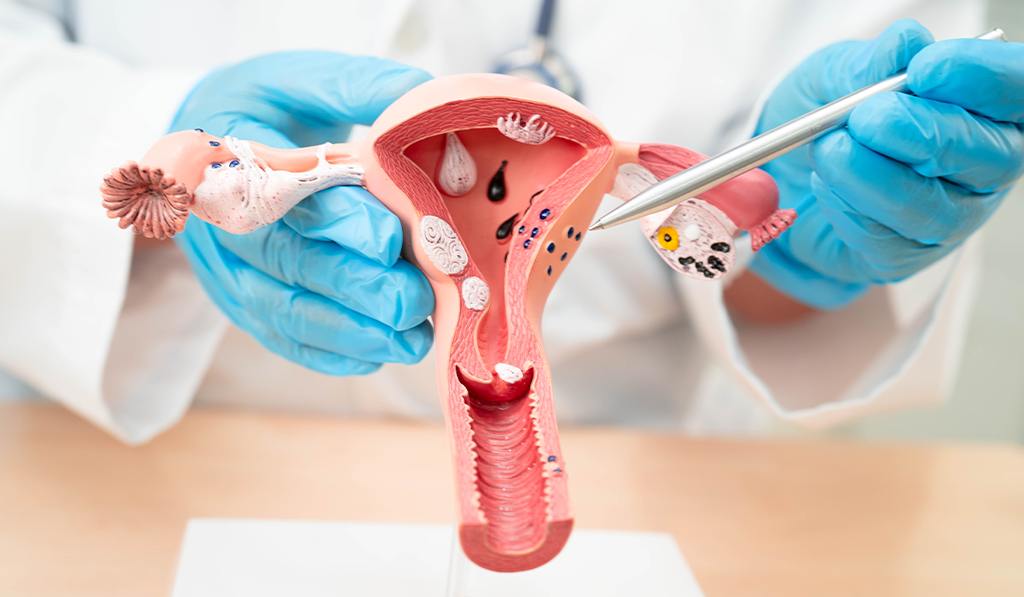
What Are Fibroids and Ovarian Cysts?
Fibroids are non-cancerous growths that develop in or around the uterus. They vary in size and number and may be located within the uterine wall, on the surface, or inside the cavity. Ovarian cysts are fluid-filled sacs that develop on or inside the ovaries. Most are harmless and go away on their own, but some may cause symptoms or need further evaluation.
At EPIA, we provide continuous monitoring and personalised care for individuals diagnosed with fibroids or ovarian cysts—whether during routine exams, fertility assessments, or symptom-based evaluations. Our goal is to determine whether these growths may be affecting your menstrual health, fertility, or overall well-being, and to support you with the least invasive options first.
Why Choose EPIA for Fibroids and Ovarian Cyst Monitoring?
We combine accurate diagnostics with a thoughtful, stage-wise approach. Many cysts and fibroids don’t require immediate treatment, but monitoring them ensures you’re safe and informed.
What sets us apart:
- High-resolution imaging and expert ultrasound interpretation
- Clear explanation of findings and risk profiles
- Hormonal or fertility-focused care plans
- Minimally invasive options for symptomatic cases
- Guidance on fertility preservation, if relevant
Whether your diagnosis is recent or long-standing, we help you track, understand, and manage your reproductive health with confidence.
What’s Included in Fibroid and Cyst Monitoring at EPIA?
- Baseline Ultrasound Scan: To assess size, number, and location
- Cycle Tracking: To check how fibroids or cysts change over time
- Symptom Assessment: Including bleeding, pelvic pain, pressure, or bloating
- Hormonal Evaluation: If irregular cycles or hormonal disturbances are present
- Growth Monitoring: Serial scans to determine if the growth is stable, shrinking, or increasing
- Referral for Surgery (if needed): When cysts are persistent or fibroids are distorting the uterus
- Fertility Counselling: If you’re planning pregnancy or undergoing treatment like IVF
We balance clinical vigilance with comfort—monitoring closely but avoiding overtreatment when not needed.
Who Should Visit EPIA for Fibroids and Ovarian Cyst Monitoring?
- Individuals with known fibroids or ovarian cysts looking for expert follow-up
- Women experiencing heavy or painful periods, bloating, or pelvic pain
- Patients undergoing fertility evaluation or treatment
- Those with irregular ultrasound findings in the past
- Anyone with a family history of fibroids or endometriosis
Even if your symptoms seem minor, early evaluation can prevent complications and support future fertility goals.
Fibroids and Ovarian Cyst Monitoring FAQs
Do all fibroids and cysts need to be removed?
No. Many are small, stable, and symptom-free. Treatment is only advised if they’re growing, causing discomfort, or affecting fertility.
Can fibroids affect my chances of pregnancy?
Yes. Depending on their size and location, fibroids may interfere with implantation or increase miscarriage risk. Your doctor will assess and guide you accordingly.
Are ovarian cysts dangerous?
Most ovarian cysts are functional and resolve naturally. However, persistent, large, or painful cysts may need intervention.
What are the treatment options?
Options range from watchful waiting and hormonal therapy to surgical removal (myomectomy or cystectomy). At EPIA, we aim to preserve fertility wherever possible.
How often should I get scans?
Scan frequency depends on your findings and symptoms. Your doctor will advise whether monitoring should be done every 3–6 months or yearly.
Is surgery always needed if the cyst is large?
Not necessarily. Size is just one factor. We also look at the appearance, blood flow, symptoms, and how the cyst behaves over time.