What is Egg Freezing?
Egg freezing (oocyte cryopreservation) is a cutting-edge fertility preservation technique that allows individuals to preserve their eggs at a younger, more fertile age for future use. The eggs are retrieved from the ovaries, carefully frozen using vitrification (a flash-freezing method), and stored until you're ready to conceive.
This option empowers women to take control of their fertility — whether for medical, professional, or personal reasons — without compromising future family-building potential.
Who is Egg Freezing for?
Egg freezing may be right for you if:
- You are in your 20s or early 30s and want to preserve your fertility for later.
- You are not ready to have a child now but want to keep your options open.
- You are undergoing medical treatments (e.g., cancer, endometriosis surgery) that may affect fertility.
- You have a low ovarian reserve or family history of early menopause.
- You are exploring IVF in the future and want to optimize outcomes.

The EPIA Difference
Why Choose EPIA for Egg Freezing?
- Advanced Ovarian Reserve Testing: We personalize your freezing protocol based on AMH, AFC, and genetic insights.
- Vitrification Technology: Our lab uses world-class cryopreservation techniques with industry-leading survival rates.
- Fertility Intelligence Dashboard: A digital interface that tracks your fertility markers over time.
- Fertility Concierge Support: From first call to post-freeze guidance, we’re here with emotional and logistical support.
- International Standards, Indian Access: Global-grade care at a fraction of global costs.
Egg Freezing Process
What is the Egg Freezing Process?
- Step 1: Initial Consultation Meet our fertility specialist, understand your hormones, and create a personalized plan.
- Step 2: Ovarian Stimulation Take hormone injections for 10–12 days to stimulate egg development.
- Step 3: Monitoring Regular scans and blood tests to track egg growth.
- Step 4: Egg Retrieval A minor procedure done under light anesthesia — takes about 20 minutes.
- Step 5: Freezing Eggs are flash-frozen using vitrification and stored safely at -196°C.
- Step 6: Post-Treatment Check-In We update you on the number of eggs frozen and guide you on next steps.
Egg Freezing
FAQs
Can't find what you're looking for?
What’s the ideal age to freeze eggs?
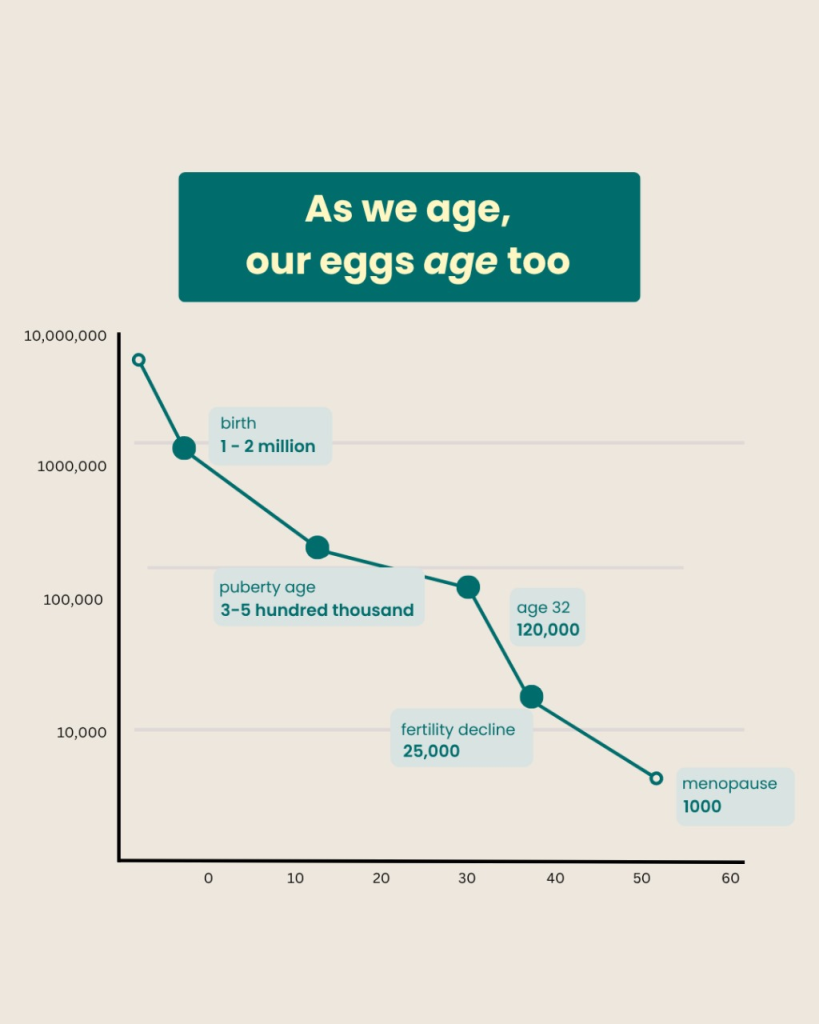
The earlier, the better — ideally between 28–35, when egg quality is highest.
How many eggs should I freeze?
Typically, 8–15 mature eggs per pregnancy attempt is ideal. Your doctor will guide you based on your profile.
Does the procedure hurt?
It’s mostly painless. You’ll have some bloating from the stimulation and light sedation during retrieval.
Are there any risks?
Egg freezing is safe. Rare risks include ovarian hyperstimulation syndrome (OHSS), which we closely monitor and prevent.
How long can eggs be stored?
Technically, indefinitely. Successful pregnancies have been reported from eggs stored for over 10 years.